



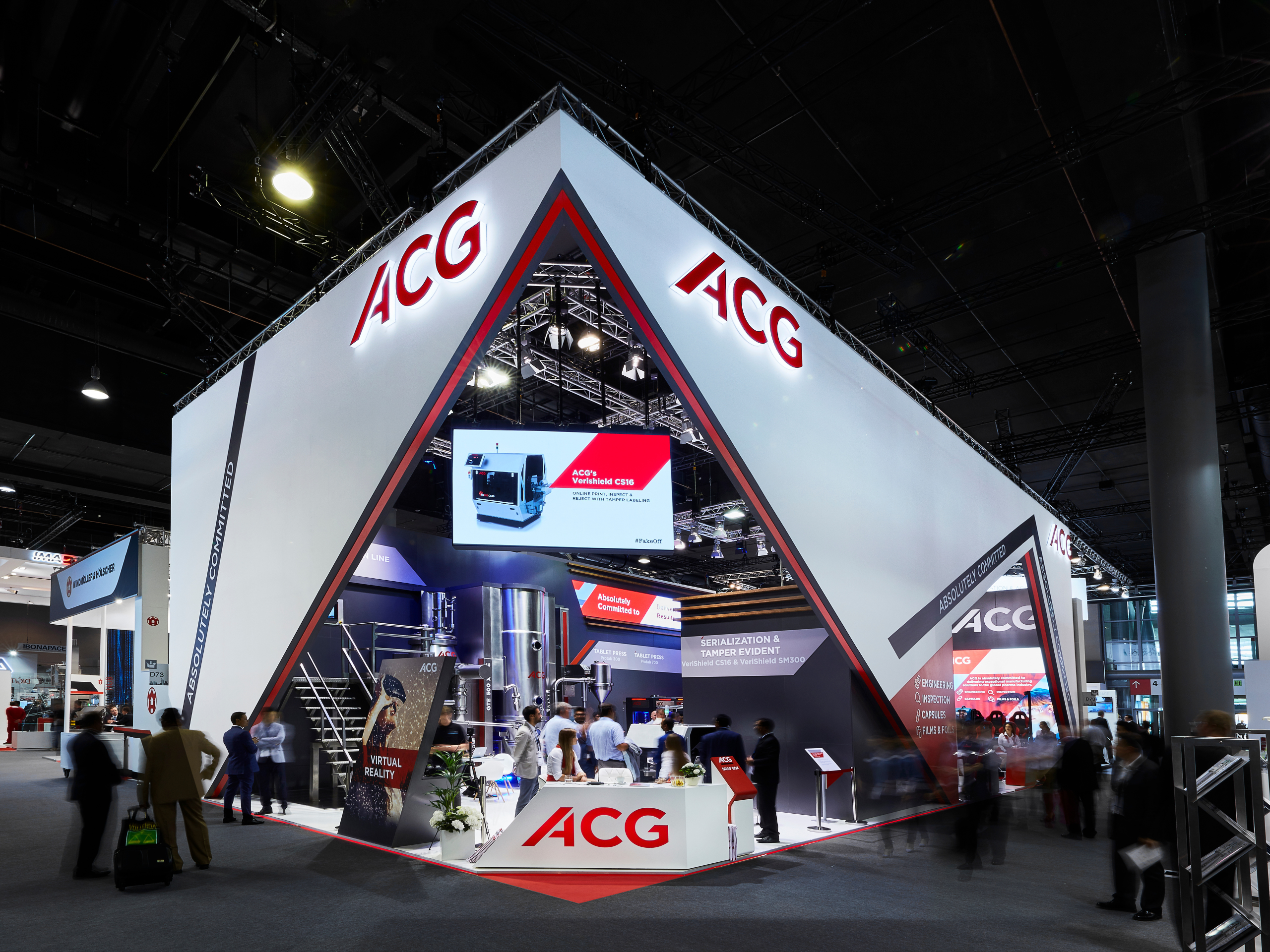
Berlin hosts some of the biggest exhibitions in Europe. ITB Berlin brings the world’s travel industry together. InnoTrans is the leading show for transport technology. IFA Berlin pulls in consumer electronics brands from every continent. Exhibiting at any of these events is a serious spend, yet most exhibitors still leave the show floor without a clear answer to one question. Did the stand actually pay off?
This guide walks through how to measure exhibition stand ROI for Berlin shows, what to track before, during and after the event, and where most companies go wrong.
What Does Exhibition Stand ROI Actually Mean?
Exhibition stand ROI compares the value your stand generated against everything you invested in exhibiting. It goes beyond counting visitors. Instead, it measures the conversations that became qualified leads, the leads that developed into customers, and the brand visibility that continued to influence buying decisions long after the exhibition ended.
A simple way to frame it:
ROI = (Value Generated minus Total Cost) divided by Total Cost, shown as a percentage.
If the number comes out negative right after the show, that does not always mean the show failed. It usually means the value has not shown up in your numbers yet.
What Should You Include When You Calculate Total Cost?
Most exhibitors undercount their spend because they only look at the obvious lines. A complete cost picture for a Berlin show should include the following:
- Stand design, construction and rental fees
- Space rent, venue services, electrics and internet
- Graphics, furniture, screens and freight
- Travel, accommodation and staff time for the whole team
Missing even one of these categories makes your final ROI figure look better than it really is, and that leads to poor budget decisions the next time around.
Why Does It Take Months to See ROI from Exhibiting in Berlin?
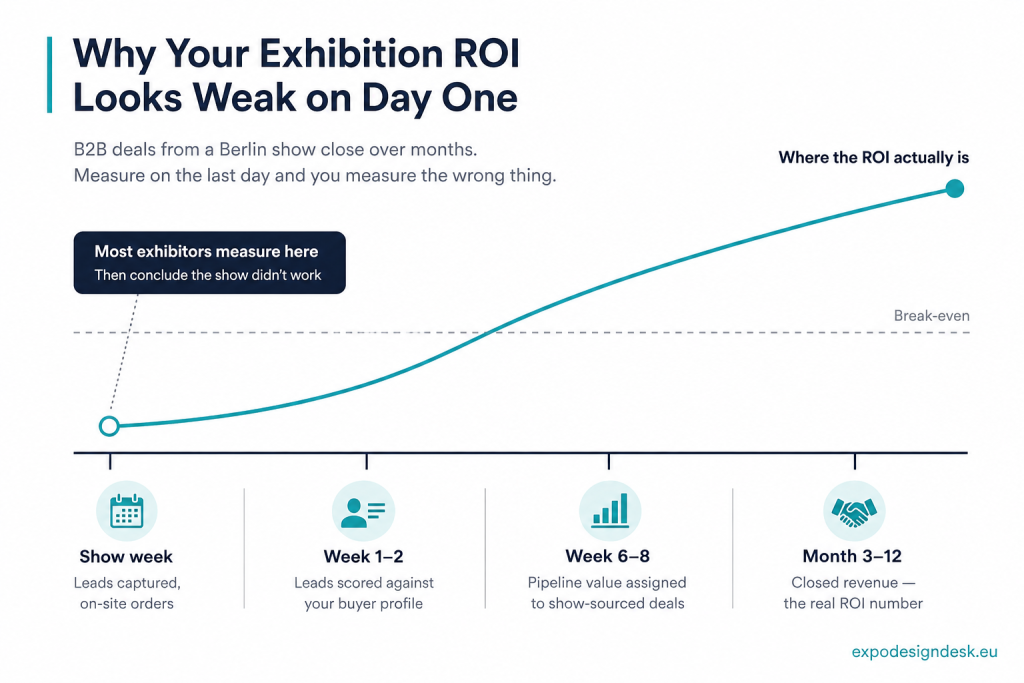
Most B2B sales cycles in Germany run longer than a single show week. A conversation at your ITB Berlin stand in March about a partnership deal may only become a signed contract by summer. If you measure ROI on the last day of the show, you will almost always get a number that looks weak, even when the show actually worked.
The fix is to track two separate figures. Measure immediate results such as on-site sales and signed agreements right after the show. Then track a longer pipeline figure over the following months, using your own company’s usual conversion rate to estimate the potential value of what those early conversations are worth.
Which Metrics Should You Track at a Berlin Exhibition?
Set your metrics before the show opens, not after it closes. A useful framework for exhibitors at ITB Berlin, InnoTrans or IFA Berlin:
- Leads captured. Every scanned badge or collected contact, counted on the show floor.
- Qualified leads. Leads that match your buyer profile, reviewed within two weeks.
- Meetings booked. Follow-up conversations scheduled, tracked within a month.
- Pipeline value. Estimated deal value tied to show leads, reviewed after six to eight weeks.
- Closed revenue. Actual business signed, tracked over three to twelve months.
How Do You Set Up Clean Lead Tracking Before the Show Floor Opens?
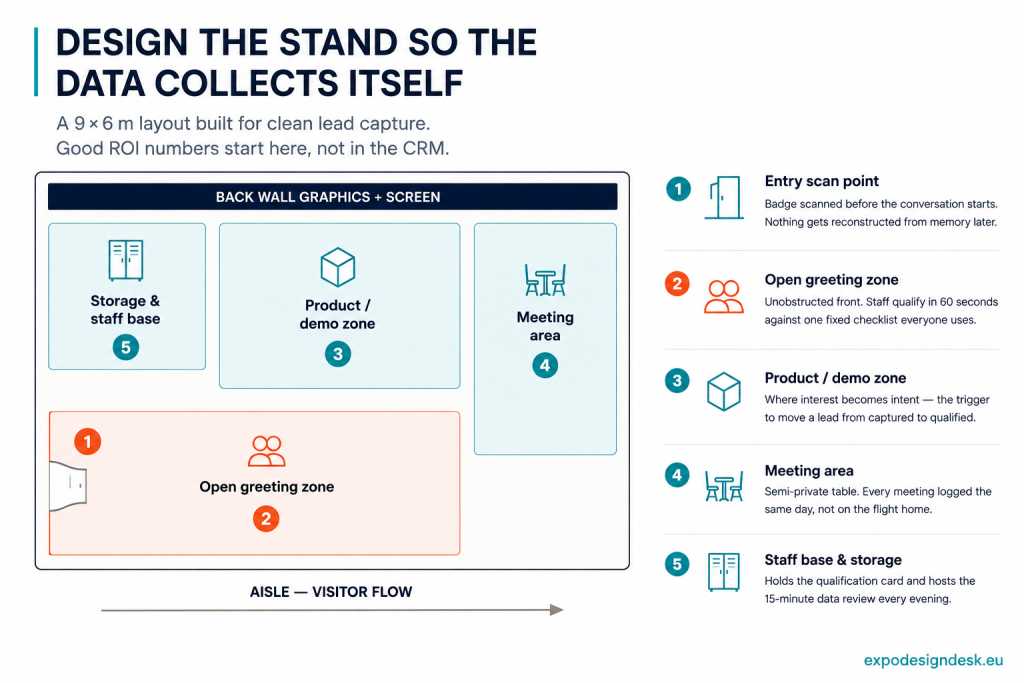
Good ROI numbers start with good data collection, and that begins with how your stand is built, not with the CRM you use afterward. A stand with a proper meeting area, a clear scanning point and an easy path for staff to log conversations will always produce cleaner data than a stand with none of these.
Steps that work well for German shows:
- Give each exhibition its own QR code or dedicated landing page so every lead is tracked at the source
- Give every staff member the same short qualification criteria checklist so leads are scored the same way
- Log meetings and conversations the same day rather than at the end of the show
- Review captured data every evening of the show, not only once it ends
What Should You Measure Beyond Direct Revenue?
Not every good outcome from a Berlin show turns into a line on a sales report. Brand visibility, press coverage, competitor insights gathered on the floor, and the quality of conversations with partners all matter, especially at events like ITB Berlin, where relationships often lead to business much later.
Set a target for these outcomes before the show, the same way you would for a revenue goal:
- Press mentions and coverage across industry publications
- Meaningful conversations with partners, distributors or media
- How your stand compared to nearby competitors
- Feedback gathered directly from visitors on the floor
Common Mistakes That Distort Exhibition ROI Numbers
Many exhibitors weaken their own ROI data before the show even starts. The most common issues:
- No agreed metrics before the show, so post-event analysis has nothing to compare against
- A stand layout that makes lead capture clumsy or inconsistent
- No benchmark for context, so a lead count cannot be judged as strong, average or weak
- Measuring ROI only on the last day, before pipeline value has had time to develop
- Leaving out real costs like staff time, travel and pre-show marketing
A Simple Post Show Review Checklist
Once the stand comes down, a short structured review turns one show into a better plan for the next one:
- Did the stand draw the foot traffic you expected for its size and location?
- What worked and what did not in the layout and visitor flow?
- Were staff prepared to qualify visitors and log leads consistently?
- How many leads were genuinely qualified, not just collected?
- Where does this show sit against your original goals?
The exhibitors who get the most out of Messe Berlin aren’t the ones with the biggest budget. They’re the ones who know exactly what they’re measuring before the doors even open. Start your next Messe Berlin project with that clarity already built in.

