
You have booked your space at Messe Berlin. Before a single wall panel or graphic gets designed, there is a more fundamental decision to make. Do you build a custom exhibition stand, or work with a modular system?
Both routes can deliver a result on the show floor, but they are not equally effective in our experience. Most of what we build, and where our design team spends much of its time, is custom stands, because a flagship Berlin fair tends to reward a bespoke build more than almost any other market in Europe. Modular and hybrid have a real place too. For a narrower set of situations, this guide is honest about when that applies rather than pretending every option suits every brief equally. The right choice comes down to your objectives, your budget, how often you exhibit, and where your brand needs to sit in a visitor’s mind. Get it right and your stand becomes one of the hardest working assets at the show. Get it wrong and you have either overspent on flexibility you never needed, or under-delivered on the impact a flagship appearance demanded.
If you are searching internationally, you will probably look for an exhibition stand builder Berlin. If your team is local, you might just as easily search for a Messebauer or a Messestandbau partner. This guide breaks it down for Berlin’s exhibition calendar, from IFA Berlin and ITB Berlin to Fruit Logistica and InnoTrans, and we have added the parts most comparison articles leave out: what we actually built on the show floor, and what we would advise before a contract is signed.
Why This Decision Matters More at Berlin’s Fairs
Berlin is not a generic trade show market. It is one of Europe’s busiest exhibition cities, hosting global flagship events and specialist trade fairs, often in the same halls at Messe Berlin, sometimes in the same week. That creates two pressures at once.
The first is visitor expectation. International buyers, press and industry specialists travel to Berlin because these fairs are considered the leading events in their sector: IFA Berlin for consumer electronics, ITB Berlin for travel and tourism, Fruit Logistica for fresh produce, and InnoTrans for transport technology. Exhibitors compete for attention against well-funded stands from global brands, inside halls built to hold tens of thousands of attendees over just a few days.
The second is frequency. Distributors, agencies and B2B suppliers in particular return to Messe Berlin, and to other German venues, several times a year for different fairs. That repeat exposure changes the economics of a stand build in a way a single one-off event never does.
Both pressures point to the same question. Is this appearance about maximum impact once, or a consistent presence many times over? That is the real fork in the custom versus modular decision, and it shows up more clearly in a market like Berlin than in a city with just one show a year.
What Is a Custom Exhibition Stand?
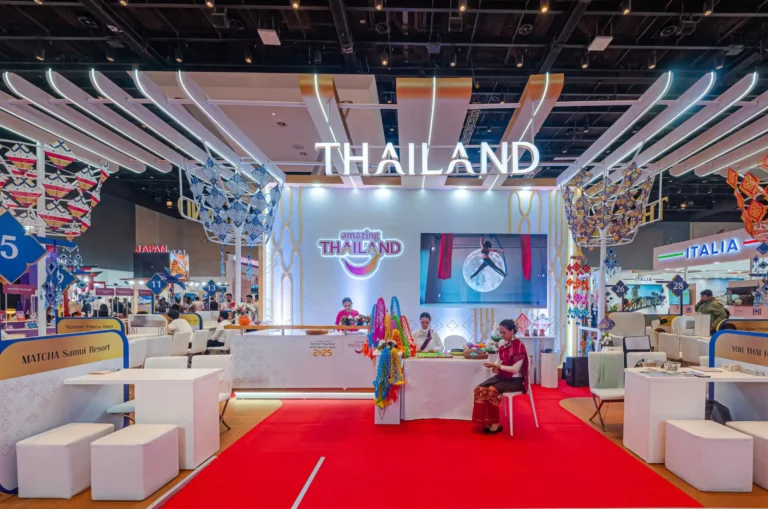
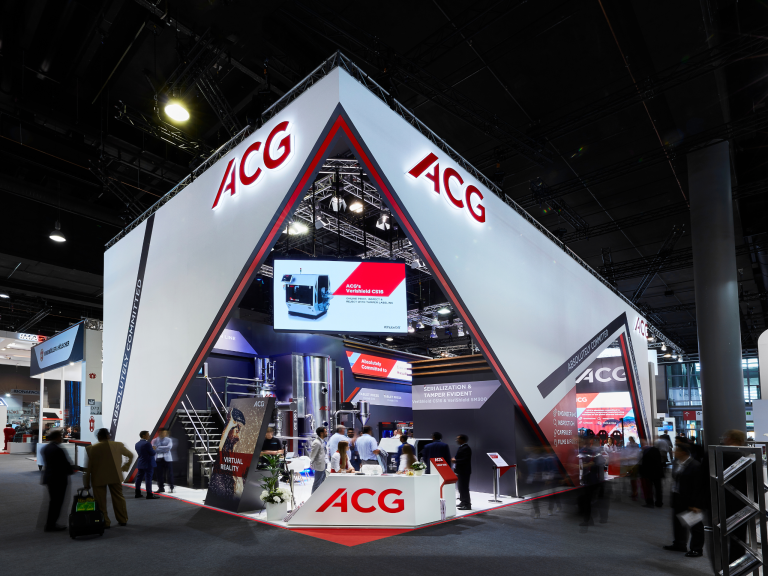
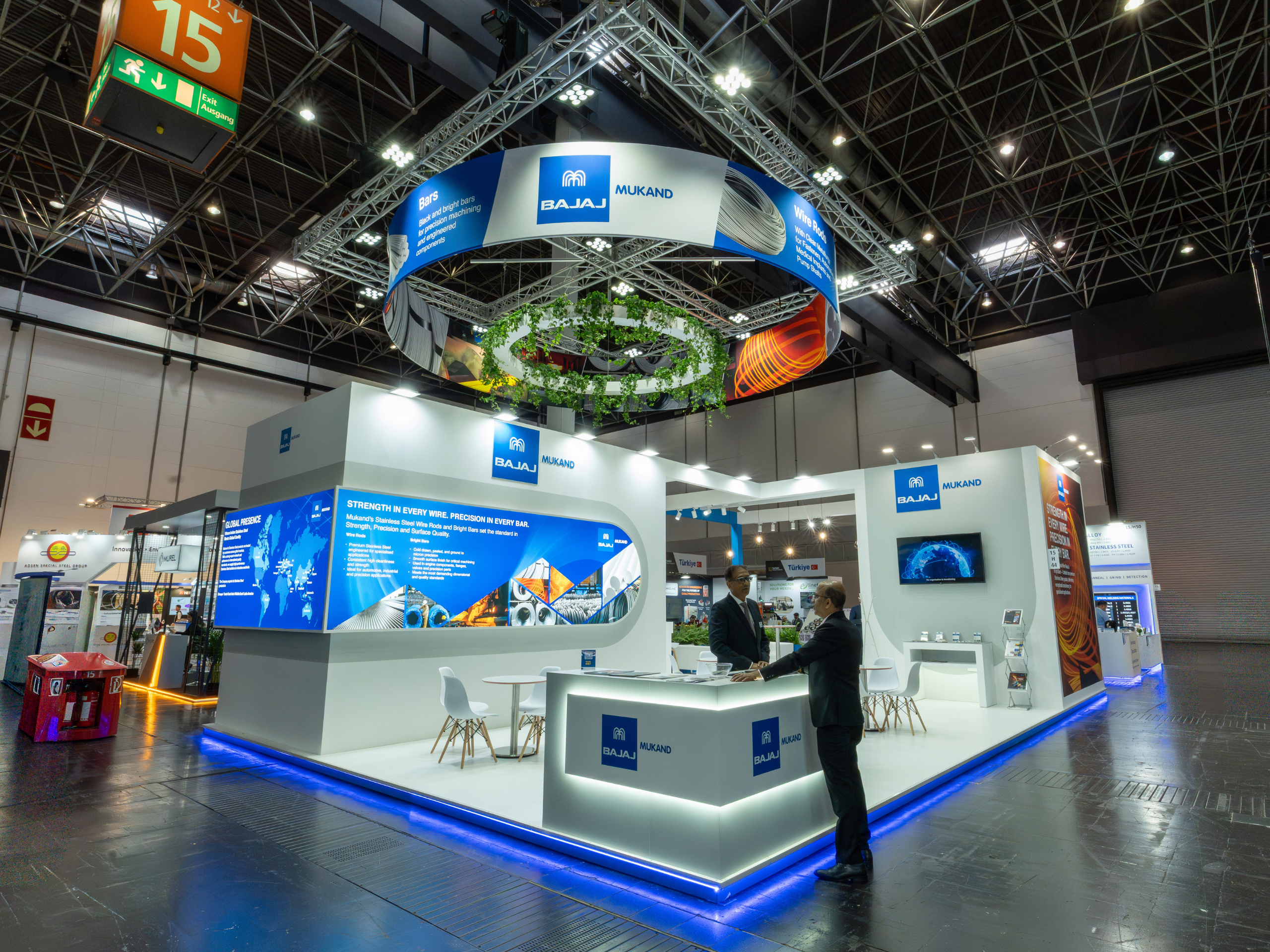
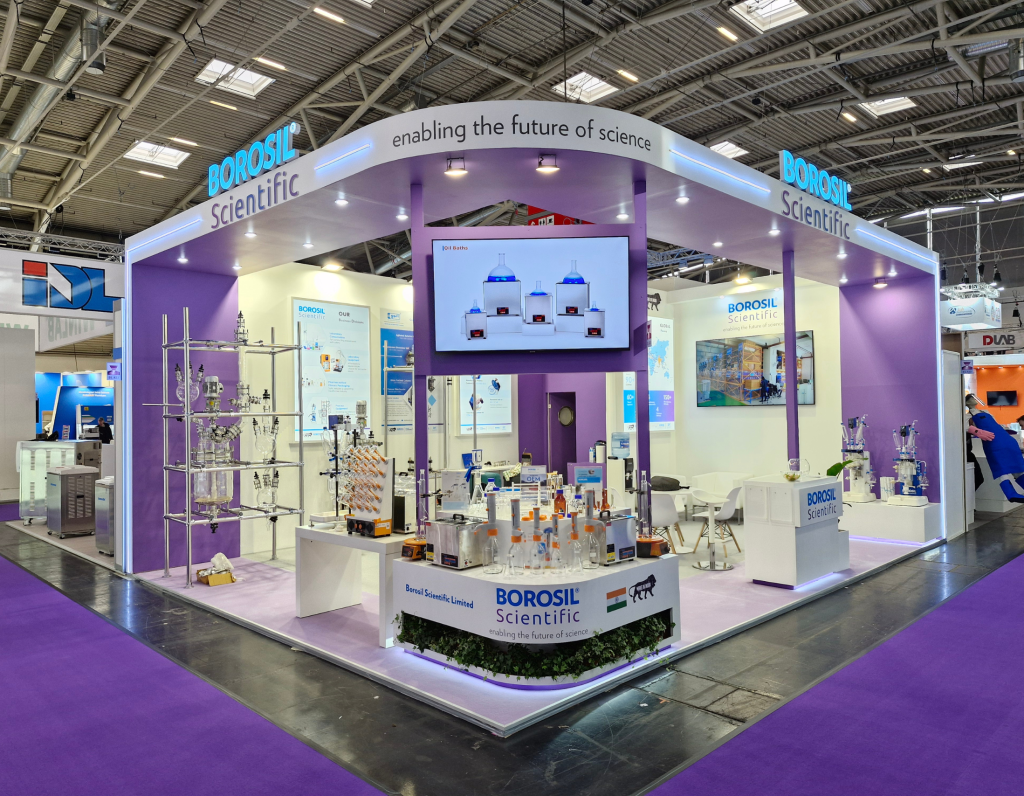
This is the format most of our clients choose for a Berlin flagship appearance, and it is where our design team’s strongest work happens. A custom exhibition stand is built from the ground up with one brief and usually one exhibition. Nothing is off the shelf. The layout, materials, lighting, flooring and graphics are all designed specifically for your space, your story and your product.
What that gives you:
– A structure that can take almost any shape or footprint, including two-storey builds, where hall regulations allow
– Premium finishes, wood, glass, metal and that read as considered rather than rented
– Total creative control over visitor flow, meeting areas, product displays and brand storytelling
– A stand that looks and feels unlike anything else on the floor
Pros: Maximum brand impact, complete design freedom, the strongest fit for flagship launches or investor-facing moments.
Cons: Higher upfront cost, longer lead time, limited reuse value without significant rework and it typically needs specialist installation crews.
Best suited for: Product launches, flagship appearances at IFA Berlin or ITB Berlin and brands attending one or two exhibitions a year where standing out matters more than reusing the build.
What Is a Modular Exhibition Stand?
This is a smaller part of what we build, and it suits a narrower set of situations than custom does, but it is worth understanding on its own terms. A modular exhibition stand is built from pre-engineered, reusable components, typically aluminium frame systems, tension fabric graphics and basic carpeting, that can be assembled, reconfigured and reused across multiple shows and stand sizes.
What that gives you:
– Faster installation and dismantling, helping reduce on-site disruption and meet venue schedules.
– More predictable costs, since the core system is reused rather than rebuilt each time
– Easier transport and more compact storage between events
– The ability to scale the same system up or down for different hall footprints
Faster installation and dismantling, helping reduce on-site disruption and meet venue schedules.
Pros: Lower cost per exhibition once reused, faster turnaround and simpler logistics.
Cons: A more constrained design vocabulary, generally a less dramatic first impression than a bespoke build and less differentiation if a competitor is renting a similar base system.
Best suited for: Exhibitors attending multiple fairs per year, growing brands managing budget carefully and anyone who needs consistency over spectacle.
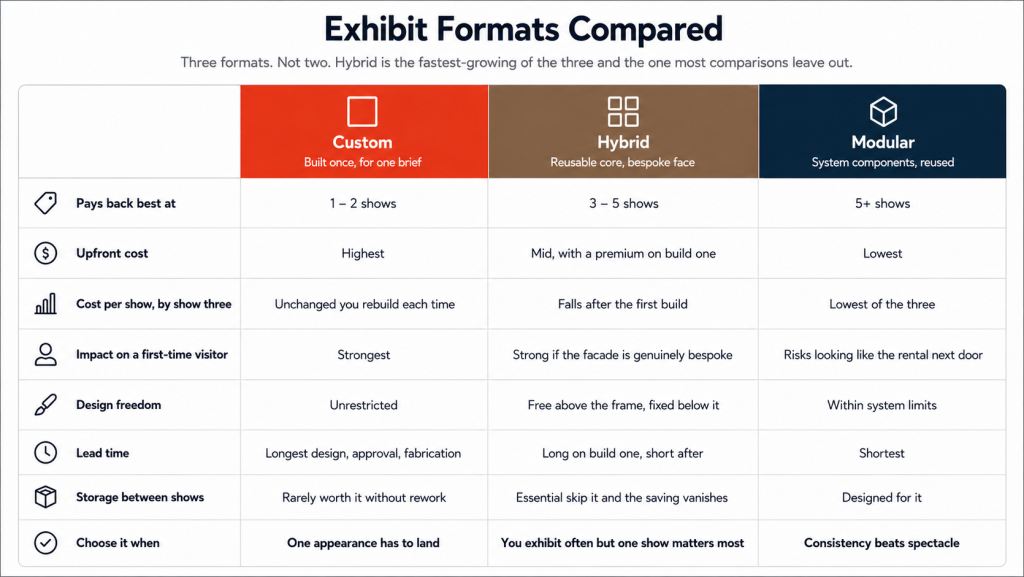
Custom vs Hybrid vs Modular at a Glance
Which Format Suits Which Berlin Fair?
Not every Berlin fair carries the same stakes, so the right format also depends on which one you are attending.
| Trade Fair | Best Choice | Why |
| IFA Berlin | Custom | Global product launches and premium consumer tech branding reward a bold, one-time design |
| Fruit Logistica | Modular or Hybrid | Frequent international exhibitors return year after year and favour reusable systems |
| ITB Berlin | Custom or Hybrid | Destination and brand storytelling benefit from a stand that feels unique to your identity |
| InnoTrans | Hybrid | Large technical displays combine reusable structural elements with bespoke showcase zones |
This is the layer most stand-builder comparisons skip, because the right answer genuinely changes fair by fair, not just brand by brand.
ITB Berlin 2026: Four Brands, Four Stories on the Show Floor
ITB Berlin is a different ball game. It is the world’s leading fair for travel and tourism, and its audience comes to build relationships as much as to evaluate products and services, spanning destinations, tour operators and travel technology providers. For 2026 we worked with four brands across the show floor, and no two of them needed the same visual language, even where the footprints were close in size.
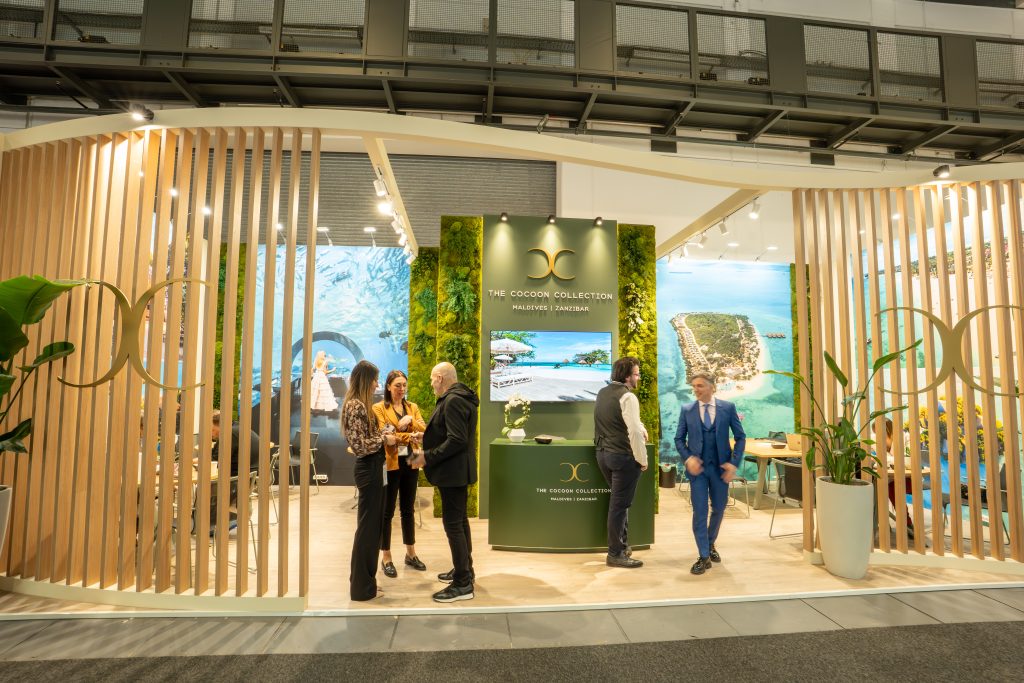
The Cocoon Collection – 40 sqm, Stand No. H5.2 – 123
The Cocoon Collection brought a 40 sqm stand built entirely around the calm of the destinations in its portfolio. Vertical greenery and warm timber elements framed clean architectural lines, creating an environment that felt closer to arriving at a retreat than walking onto a show floor. Layered visual storytelling ran throughout the stand, letting visitors connect with the brand’s luxury hospitality offering at their own pace rather than through a single hard sell at the front of the booth.

Get Lost – 23 sqm, Stand No. H4.1 – 201
Get Lost took a 23 sqm stand built around the idea of discovery. Bold architectural forms paired with large scale destination visuals to create an immediate sense of wanderlust, while a dark colour palette kept the focus on the imagery rather than competing with it. Every element on the stand pointed at the same goal: a first impression memorable enough to capture the excitement of travel in the few seconds a visitor takes to walk past.
Sweeply – 20 sqm, Stand No. H10.1 – 110
Sweeply returned to ITB Berlin in 2026 with its own dedicated 20 sqm stand, a very different setup from the shared booth it took the year before. The design pulled directly from the brand’s own marketing campaign, translating running track graphics across the floor and walls to create an immediate visual link to movement, coordination and performance. The continuous lane patterns gave the space a sense of rhythm and direction, reinforcing Sweeply’s positioning as a platform that helps hospitality teams run smoother and smarter.
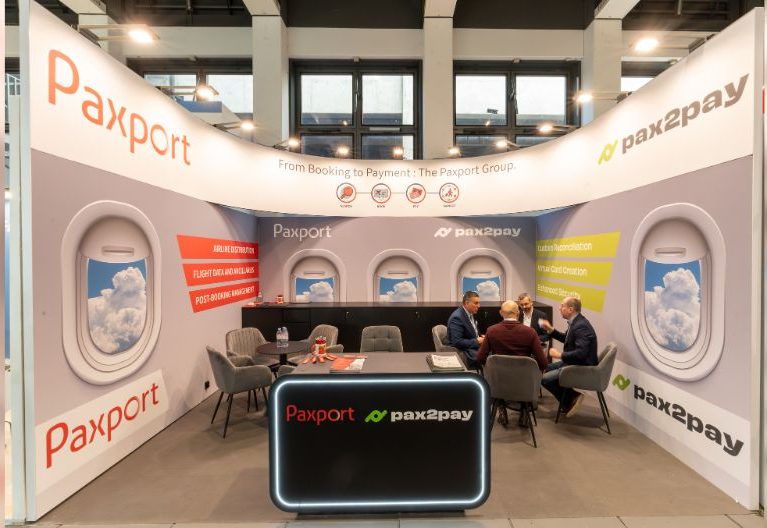
Pax2Pay – 20 sqm, Stand No. H5.1 – 102
Pax2Pay also returned in 2026, keeping the same stand size but arriving with a completely new concept. The design drew on the travel journey itself, integrating aircraft window graphics into the back wall to create an immediate and relevant visual connection to the aviation and travel ecosystem. The framed windows added depth and narrative to the space, reinforcing Pax2Pay’s position at the intersection of travel and financial technology.
What Tied These Four Stands Together
What connects these four projects for 2026 isn’t a shared look, since each one took a completely different visual approach. It’s a shared discipline: translating an abstract brand idea into something a visitor can read in the first few seconds. Tranquillity became greenery and timber. Discovery became a dark backdrop built to spotlight destination imagery. Movement became a running track laid into the floor. Travel and fintech became a wall of aircraft windows. That’s the real brief behind every hospitality and travel stand we build, whatever the size or hall.
Cost Considerations: The Factors That Actually Move the Number
Exact prices are difficult to quote responsibly in a blog post because no two exhibition stands are the same. Costs are influenced by factors including stand size, design complexity, build specifications, graphics, technology, and venue requirements. Rather than focusing on a fixed figure, it is more useful to understand what drives the overall investment, whether you’re planning a 9 sqm stand or a 36 sqm or larger island or two-storey build.
The factors that matter most:
- Graphics: print quality, format (rigid panels versus tension fabric) and quantity
- AV: screens, interactive displays, sound systems
- Flooring: raised platforms, branded flooring, carpet grade
- Lighting: standard fittings versus a fully designed lighting scheme
- Storage: whether components are stored and reused between shows or rebuilt every time
- Rigging: ceiling-hung signage or structures, where the hall permits it
The honest answer to “how much will my stand cost” depends entirely on your brief. That is exactly what a free design consultation is for.
Which Industries Prefer Which?
| Industry | Typical Preference | Why |
| Medical & Healthcare | Custom | Compliance needs, demo zones and trust building favour bespoke layouts |
| Automotive | Custom | Vehicle displays and lighting require structural flexibility |
| Technology | Custom or Hybrid | Product launches favour custom, recurring conferences favour hybrid |
| Manufacturing | Custom or Hybrid | Frequent regional and international fairs reward reusable systems |
| Packaging | Hybrid | Multiple annual trade shows and budget-conscious buying cycles |
| Food & Beverage | Hybrid | Repeat attendance with tasting or demo zones |
| Startups | Modular | Lower budget and uncertain exhibition frequency |
| Government Pavilions | Custom | Representational branding and formal meeting zones |
Hybrid Stands: The Option Most Guides Skip
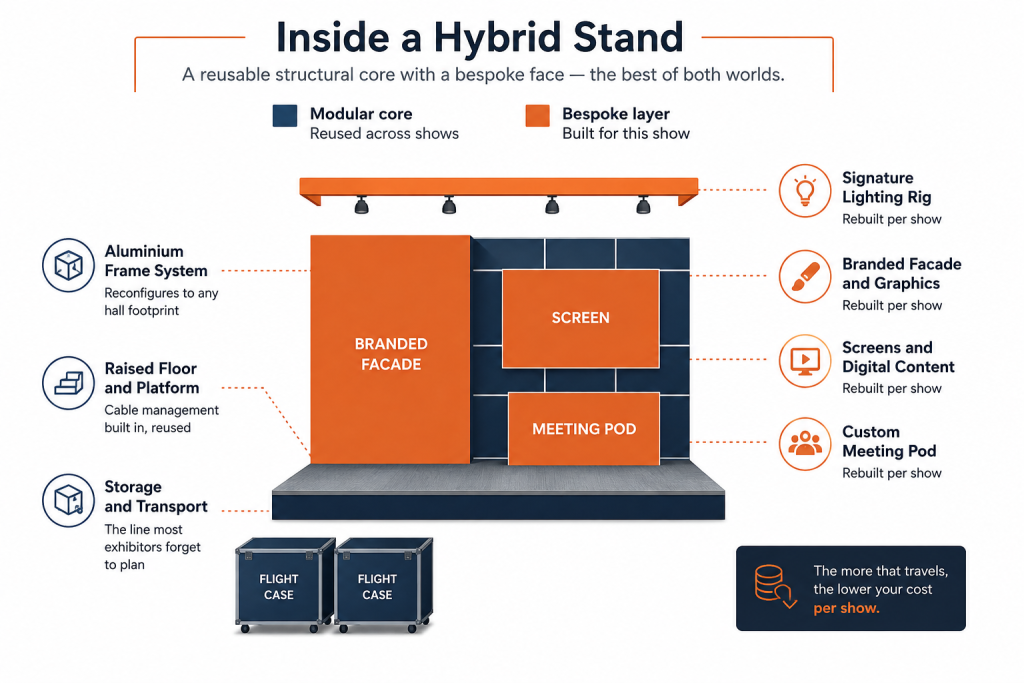
Most comparisons frame this as binary, custom or modular, but the fastest-growing category in the market is neither. A hybrid stand pairs a modular structural core, frame, flooring and storage-friendly components, with bespoke elements layered on top: a branded facade, a signature lighting rig, a custom meeting pod or a digital overlay.
The appeal is straightforward. You get the cost and logistics discipline of a reusable system, with enough bespoke detail that the stand does not feel interchangeable with the rental next door. For exhibitors covering more than two or three German fairs a year, a hybrid approach is often the most optimal option, financially and creatively.
Lessons Learned Over 21 Years and 2,500+ Stands
We would rather share what we have gotten wrong, or seen go wrong, than pretend every project has been smooth. A few patterns keep coming up.
Mistakes we have seen exhibitors make:
- Choosing solely on price, without factoring in reuse value or lead generation potential
- Approving a design from a render without walking the visitor flow, so a stand looks good on screen but creates bottlenecks on a busy show day
- Skipping storage planning, then paying rebuild costs at every single show that follows
- Under investing in lighting, which quietly affects how a stand photographs and reads from the aisle
- Planning too late. What multiple Berlin fairs have taught us about the halls themselves. Technical and industrial fairs like InnoTrans reward clarity over decoration, visitors are moving with a checklist in mind and a stand has seconds to communicate what it does. Relationship-driven fairs like ITB Berlin reward seating and sightlines, because the goal is a conversation, not a glance. Neither observation is unique to one hall, but seeing it play out on two very different show floors in the same city is what turned it from a hunch into something we now build into every brief.
Why Design Desk
We do not favour one stand format over another because the right solution depends on your exhibition objectives, budget and long-term plans. A first-time exhibitor entering the German market will often have different priorities from an established brand exhibiting at events such as IFA Berlin or MEDICA.
Founded in 2005, Design Desk has supported exhibitors across Europe for more than two decades. Today, our team of ten exhibition designers develops concepts tailored to each brief, allowing room to explore different creative directions before a design is finalised. Every project is managed by a dedicated project manager who remains your single point of contact from the initial briefing through to installation. We also provide a complimentary 3D stand visualisation within 4 to 7 working days, giving you a clear understanding of the proposed design before production begins.
Our process is built around understanding your objectives before recommending a solution. We begin by discussing your brand, exhibition goals and event requirements, then develop concepts that align with those priorities. Once the design is approved, the same project manager coordinates the production, logistics and on-site installation. This approach has been followed across more than 2,500 exhibition stand installations in over 30 countries, providing consistency from the initial brief through to project completion.