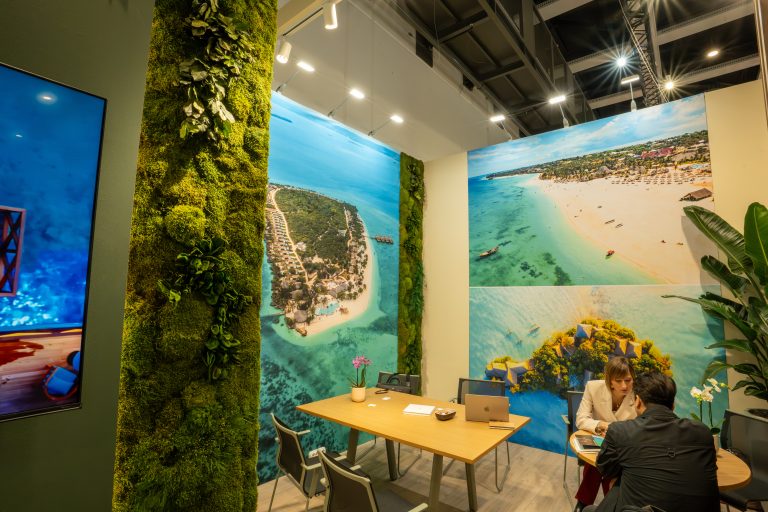


Most exhibition stand projects are decided long before anyone picks up a drill. They are decided in the first few conversations with the builder.
That is where the brief is set. That is where decisions are made about your budget and your plot and what the stand is meant to achieve. Exhibitors who ask precise questions at this stage tend to get stands that work. Exhibitors who ask only about price tend to get surprises later.
This guide sets out the questions worth asking an exhibition stand builder before the project starts. Each one includes what a strong answer sounds like so you can gauge the conversation and make an informed decision.
Questions about design thinking
How will this design make us recognisable from the far side of the hall?
Visitors decide whether to approach a stand from roughly ten metres away. Ask the contractor to explain which element does that work. It might be height or a lit volume or a single graphic that reads at distance. A strong answer names the element and explains the reasoning. A weak answer talks only about how the stand looks up close.
What will change once you see my actual plot?
Plots are rarely neutral. A pillar or a service duct or a low ceiling zone changes what is possible. So does the number of open sides and the height of the stands next to you. Ask what will be altered after reading the floor plan. A builder who says nothing will change has not read it yet.
How many concept directions will I see and how do revisions work?
You want to know whether you will receive one idea or several workable routes. You also want clarity on how feedback becomes a revised drawing and how many rounds sit inside the agreed scope. Vague answers here become friction later.
Questions about the venue and the space
Who prepares the technical drawings and structural specifications?
Space only plots require documentation before build up. Ask who produces the stand plans and structural specifications and who submits them to the organiser. The point is not to test the contractor. The point is to know which task lands on your desk and which does not.
What are the electrical and rigging limits on my stand?
Power load and floor loading and rigging permission are practical constraints. Each one can change a design completely. Ask early. A design that assumes a hanging banner in a hall that does not allow one is a design you will have to revisit.
How do neighbouring stands affect the layout?
Your visibility depends partly on what surrounds you. Ask whether the builder has checked the block plan and how the layout responds to a tall neighbour or a busy aisle on one side only.
Questions about cost and scope
Can I see the quote broken into elements?
Ask for the figure to be split by element:
- structure and carpentry
- graphics and print
- flooring
- lighting
- furniture and fittings
- transport
- on-site labour
An itemised quote lets you compare suppliers properly and lets you trade one element against another without losing the whole concept.
Which costs sit outside the stand quote?
Floor space and stand catering and venue supplied services are usually separate. Insurance and staff travel normally sit outside the quote as well. Ask which of these the contractor expects you to arrange. Knowing the full picture early protects your marketing budget.
What happens to the price if I approve the design then change it?
Every project has a point where a change stops being free and starts being expensive. Ask where that point is and what a typical change costs. A stand builder who has run many projects will answer this without hesitation.
Questions about the schedule
What are the approval milestones and when is the design frozen?
Work backwards from the show. Ask for three dates. The date the concept must be signed off. The date print-ready artwork is required. The date after which the layout cannot change. These dates are the real project plan. Everything else follows from them.
Who is on site during build-up and show days?
Ask whether the person managing the build is the same person you have been speaking to. Ask how they can be reached during build-up. Most stand problems are solved on site in minutes by someone who already understands the project.
What is the contingency if something arrives damaged?
Things occasionally go wrong in transit. Ask what the response looks like. Experienced teams describe a process. Inexperienced ones describe a hope.
Questions about proof and track record
Can I see photographs of finished stands rather than renders?
Renders show intent. Photographs show execution. Ask for images taken on the show floor of projects similar in size and budget to yours. The gap between the render and the built stand is where quality becomes visible.
Have you worked with exhibitors in my sector?
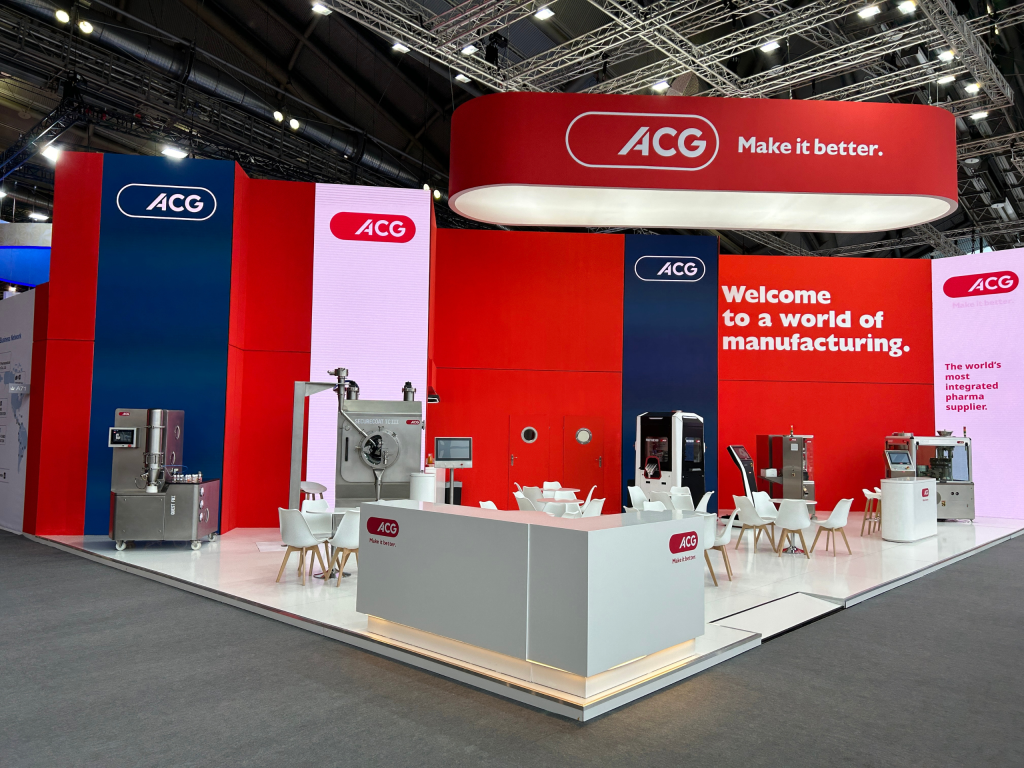
Sector matters more than most exhibitors expect. A pharmaceutical stand and an automotive stand solve different problems around demonstration space and private meeting areas and product weight. Ask for a relevant example and ask what the client wanted to achieve.
Can I speak to a past client?
A contractor confident in their delivery will offer a reference without discomfort. It is one of the fastest ways to learn how a company behaves when a project gets complicated.
Questions most exhibitors forget to ask
This is where good projects separate from average ones. These questions rarely appear on standard checklists.
Who owns the design files once the project ends?
Design ownership is often unstated. Ask whether the drawings and 3D files remain available to you and under what terms. It matters if you later want to reuse a concept across several shows.
What happens to the stand after the show closes?
Some elements can be stored and reconfigured for the next event. Others cannot. Ask which parts of the proposed design have a second life and which are single use by nature. That answer changes the true cost per show.
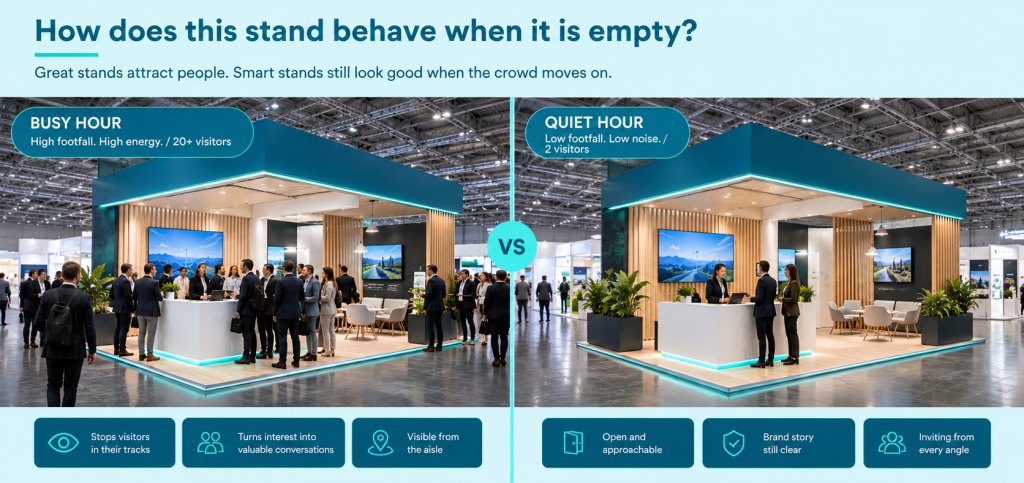
How does this stand perform when it is empty?
Stands are busy for a few hours a day and quiet the rest of the time. A layout that looks warm with fifteen visitors can look abandoned with two. Ask how the design holds up in a quiet hour.
Where do conversations actually happen?
Ask the designer to point at the drawing and show you where a visitor stands. Then where your team stands. Then where a longer discussion happens without blocking the entrance. A stand is a workplace for three days. It should be designed like one.
What do you need from me and when?
Reverse the question. Ask the contractor to list exactly what they need from you. Usually that means logo files and brand guidelines, product dimensions, the exhibitor manual and your plot number. Late input from the exhibitor is one of the most common causes of rushed design work.
A checklist for your first call
- What outcome should this stand deliver for us
- What will you change once you see our plot
- How many concepts will we receive
- Who prepares the technical drawings and structural specifications
- What are the power and rigging limits on our plot
- Can we see the quote broken into elements
- Which costs sit outside your quote
- When is the design frozen
- Who manages the build on site
- Who owns the design files afterwards
Take the list into the conversation. The quality of the answers will tell you more than any brochure.
How we approach these questions at Design Desk
Design Desk has worked with exhibitors since 2005. Over 21 years the team has delivered more than 2500 projects across 30+ countries for 300+ clients. A team of 45+ people covers design and project management.
Our answers to the questions above are straightforward. Every project begins with a briefing conversation rather than a drawing. Design sits with our own studio so concepts and revisions stay under our control. Each exhibitor works with a dedicated project manager who stays with the project through production and installation. Where a venue requires technical documentation, we prepare stand plans and structural specifications for submission.
If you are comparing suppliers, we would rather you ask us the same ten questions you ask everyone else.
Before you sign anything
The best exhibition stand projects start with an exhibitor who asks difficult questions and a builder who welcomes them. Price is only one variable. Clarity about scope and approvals and timelines and responsibility is what turns a drawing into a stand that performs on the floor.
If you are planning your next show and want these questions answered for your specific plot and budget our team is happy to talk it through.