
For most exhibitors with floor space at Messe Frankfurt, 4 to 8 months between the first conversation with a builder and the first day of build-up is needed. 4 months is workable. 8 months is comfortable. Shell scheme upgrades and smaller projects can run on a shorter cycle. January and February shows need longer lead times because the holiday period leaves fewer working weeks than the calendar suggests.
That is the headline. The useful part is understanding what actually sets the deadline. It is rarely the builder. It is the chain of dates that starts the moment your floor space is confirmed.
Why Frankfurt has more pressure than most venues
Messe Frankfurt runs 10 halls across roughly 400,000 square metres of hall space with a further 59500 square metres outdoors. The halls are linked by the Via Mobile covered walkway and the grounds have their own S Bahn station. It is one of the busiest exhibition sites in Europe and it hosts well over a hundred events a year.
Scale matters for timing in two ways. Large shows fill halls that were occupied by a different show only days earlier. And several of the biggest fairs in the Frankfurt calendar land close together. Heimtextil opens the trade fair year from 12 to 15 January 2027. Creativeworld follows from 29 January to 1 February 2027. Achema returns from 14 to 18 June 2027. Automechanika and Formnext and the Frankfurt Book Fair anchor the second half of the year.
When your show sits inside a dense cluster the pressure is not only on hall space. It is on every supplier serving that hall at the same time.
What actually sets your deadline
Floor space confirmation
Nothing can move forward until the organiser confirms your plot. You need the stand number, the dimensions and the block plan showing which sides are open. Exhibitors often approach a builder before this exists and are surprised that work cannot begin properly.
The practical move is to separate the two decisions. You can select a builder and run the briefing conversation while your space is still being allocated. Concept work then starts the day the plot is confirmed.
The exhibitor manual
Every Messe Frankfurt show publishes an exhibitor manual with its own deadline schedule. It covers stand plan submission and electrical orders and rigging requests and hall services.. Those deadlines are set by the organiser, not your builder, and should be treated as fixed unless the organiser confirms otherwise. Read the manual as soon as it is released and mark the earliest date in it. That date is the real start of your countdown.
Technical drawings for space-only stands
Space only plots require stand plans and structural specifications to be submitted for approval before build up. The submission has to reflect a finalised design. Anything still under discussion at that point either delays the submission or forces a revision afterwards.
Print-ready artwork
Graphics are the most common cause of a late scramble. The artwork deadline usually sits well before the production deadline because printing and mounting happen before anything is packed. Exhibitors who assume artwork can be finished last tend to lose the ability to make design changes rather than the ability to print.
The production and transport window
Once the design is frozen the schedule becomes physical. Materials are ordered. Elements are made. Everything is packed and moved into a build up slot that the organiser controls. None of that stage compresses easily.
Working backwards from day one of build up
Rather than counting forward from today, count backwards from the first day of build up. A realistic sequence looks like this.
- Builder selection and briefing conversation
- Concept directions and 3D visualisation
- Revisions and design approval
- Design freeze
- Technical drawing and submission to the organiser
- Print-ready artwork supplied
- Production
- Transport
The freeze point in the middle is the one exhibitors underestimate. Everything before it is flexible. Everything after it is expensive to change. Ask your builder where that date falls before you agree on a start date rather than after.
How early is early enough for your project
First time exhibitors at a Frankfurt show
Plan for the longer end of the range. First projects carry extra work that returning exhibitors have already done. Internal objectives have to be agreed. Brand assets have to be gathered. Someone has to decide who staffs the stand and learn how the manual works. Although it is simple, it uses up your time.
Returning exhibitors reusing an existing concept
If elements from a previous stand can be reconfigured, the design stage shortens considerably. The constraint moves to whether the existing structure suits the new plot. A design built for a corner plot rarely works unchanged in an island layout.
Shell scheme upgrades
A shell scheme package from the organiser removes the structural work and leaves graphics and furniture and lighting. These projects move faster. The artwork deadline still applies and it still arrives sooner than most exhibitors expect.
Exhibitors doing several Frankfurt shows in one year
Sequencing changes everything. Planning 2 or 3 shows as one programme lets a single design carry across the year and spreads the workload. Treating each show as a separate emergency is what creates the rush.
The January problem nobody mentions
Heimtextil, Christmasworld, Creativeworld and Ambiente all sit in the first weeks of the year. Counting backwards six months from a mid-January show lands you in July. That looks generous until you subtract the holiday period. Across late December and early January the number of working weeks is far smaller than the gap on the calendar.
Anyone exhibiting in the January cluster should treat their effective deadline as several weeks earlier. This is the single most common miscalculation among exhibitors new to Frankfurt.
What actually changes when you start late
Late starts are survivable. It is worth being honest about what you lose rather than presenting a deadline as a cliff edge.
You lose design exploration first. Fewer concept directions and fewer rounds of revision. You then lose material choice because anything with a longer production requirement stops being viable. Approvals compress into a shorter window, which raises the chance of a resubmission. Freight becomes less flexible. And the parts of the design that make a stand distinctive are usually the first things removed when time runs out.
Nothing on that list is a disaster on its own. Together they turn a considered stand into an adequate one.
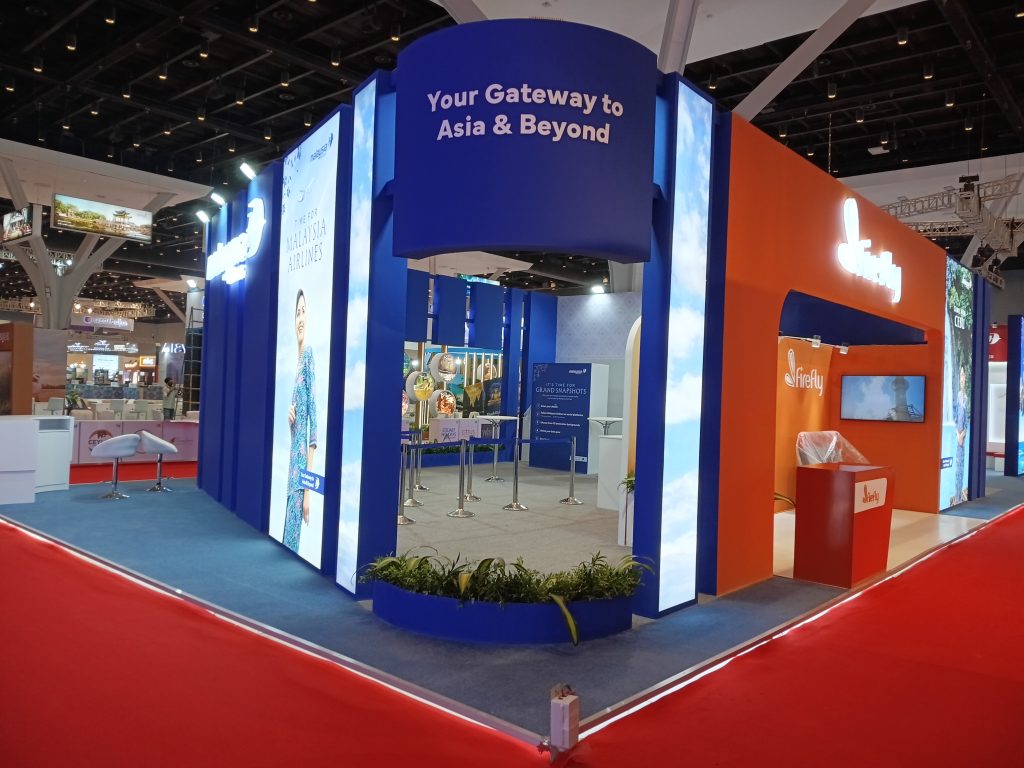
Reserving design time is not the same as signing a build contract
These are two separate decisions and separating them removes most of the timing anxiety.
The first is agreeing who will design the stand and starting the briefing conversation. The second is committing to a build once the design and the quote are settled. Exhibitors who treat them as one decision often delay both while waiting for internal sign-off. Starting the first conversation early protects the design stage, which is where much of the flexibility in the project sits.
Before you commit to a builder
Timing is only one variable. The same conversation should establish who prepares the technical drawings and how revisions are handled and where the design freeze sits and who manages the build on site. A builder who answers those clearly is a builder whose schedule you can trust.
How we work at Design Desk
Design Desk has worked with exhibitors since 2005. Over 21 years the team has delivered more than 2500 projects across 31+ countries for 300+ clients with a team of 45+ people.
For Frankfurt projects we start with the show and the plot rather than the drawing. The first conversation establishes your objective and your allocated space and the deadlines published in your exhibitor manual. Design sits with our own studio so concepts and revisions stay under our control. Each exhibitor works with a dedicated project manager through production and installation. Where a venue requires documentation we prepare stand plans and structural specifications for submission.
If your show date is close we will tell you what is realistic rather than what sounds reassuring.
The takeaway
The question is not really how early to approach a builder. It is how early the first deadline in your exhibitor manual arrives and how much design work has to happen before it. Work backwards from that date and the answer becomes obvious for your specific show.
If you know your Frankfurt show and your approximate space our team can map the sequence against your dates and tell you where the pressure points sit.